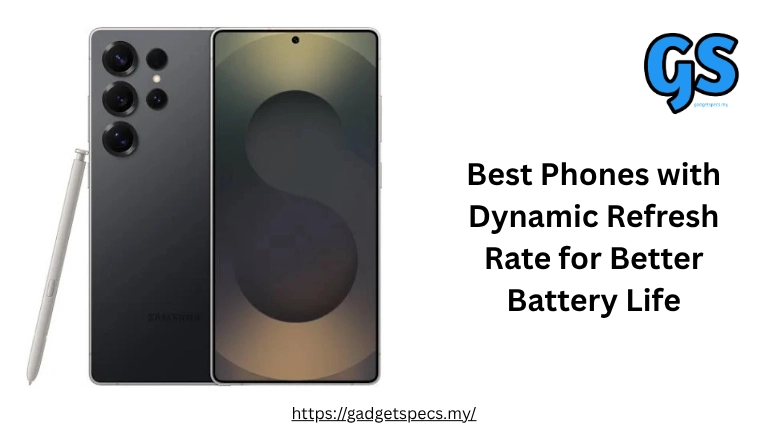
Best Phones with Dynamic Refresh Rate for Better Battery Life
A complete guide to the top smartphones that adjust screen refresh rate automatically to save battery without sacrificing smoothness
This phone is featured in our complete guide: Best Phones in Malaysia 2026
High refresh rate displays (90Hz, 120Hz and above) make phones feel smoother. But always-on high refresh can drain battery quickly.
Phones with **dynamic refresh rate** adjust the screen speed based on what you are doing — slowing down when static and speeding up when needed. This helps deliver both smooth performance and better battery life.
What Is Dynamic Refresh Rate?
Dynamic refresh rate means the phone automatically changes the screen refresh speed depending on the task. For example, it might use 120Hz when scrolling or gaming, but drop to 60Hz or lower on static screens.
This reduces power draw and extends battery life in real life.
Top Phones with Dynamic Refresh Rate
| Samsung Galaxy S25 Ultra | Adaptive 1–120Hz display for smooth performance and efficient power use |
| iPhone 16 Pro Max | ProMotion 1–120Hz adjusts based on activity and content |
| Google Pixel 10 Pro | LTPO display with adaptive refresh for balanced efficiency |
| OnePlus 12 | 120Hz adaptive refresh rate that shifts based on content |
| Vivo X100 Pro | Smart refresh rate control to save battery during static use |
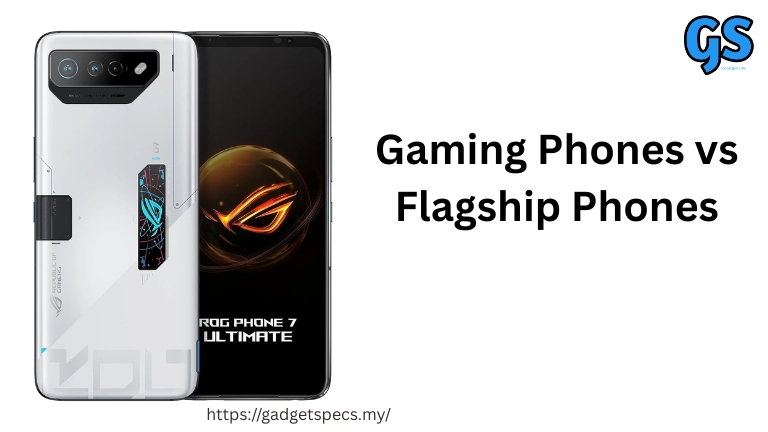
| RedMagic 8S Pro | Gaming display that adapts refresh to workload |
Real-World Battery Experience
In daily use, phones with dynamic refresh often feel smooth without a big battery penalty. For example, while reading long articles or viewing photos, the refresh rate drops automatically, conserving power.
During browsing and gaming, higher refresh kicks in to keep animations and scrolling fluid. This balance makes a noticeable difference in screen-on time.
Pros & Cons
Pros
- Smoother animations when needed
- Better battery efficiency compared to fixed high refresh
- Automatically adapts without user input
- Improves screen-on time in real use
Cons
- Some phones may still drain battery fast in heavy use
- Effectiveness depends on software optimisation
- Older apps may not fully utilise adaptive features
Malaysia Price Overview (Approx)
Samsung Galaxy S25 Ultra: RM 4,600 – RM 5,300
iPhone 16 Pro Max: RM 5,000 – RM 5,899
Google Pixel 10 Pro: RM 4,000 – RM 4,799
OnePlus 12: RM 3,500 – RM 4,200
Vivo X100 Pro: RM 3,899 – RM 4,399
RedMagic 8S Pro: RM 3,799 – RM 4,299
Who Should Buy These Phones?
Dynamic refresh rate phones are ideal for users who want both **smooth performance and longer battery life**. If you use your phone for both work and play, these phones offer the best balance.
If battery life is your top priority and you rarely use high refresh features, a phone with a standard 60Hz screen may still be adequate.
Our Verdict
Dynamic refresh rate is one of the most practical display features today. It combines smoothness with battery savings without user intervention.
Among the listed phones, the Samsung Galaxy S25 Ultra and iPhone 16 Pro Max offer the most polished adaptive refresh experience. For value seekers, phones like the OnePlus 12 and Vivo X100 Pro balance performance and efficiency well under RM4000.
Ultimately, if you want smoother visuals **without sacrificing battery life**, choosing a phone with dynamic refresh rate is a smart decision for 2026.