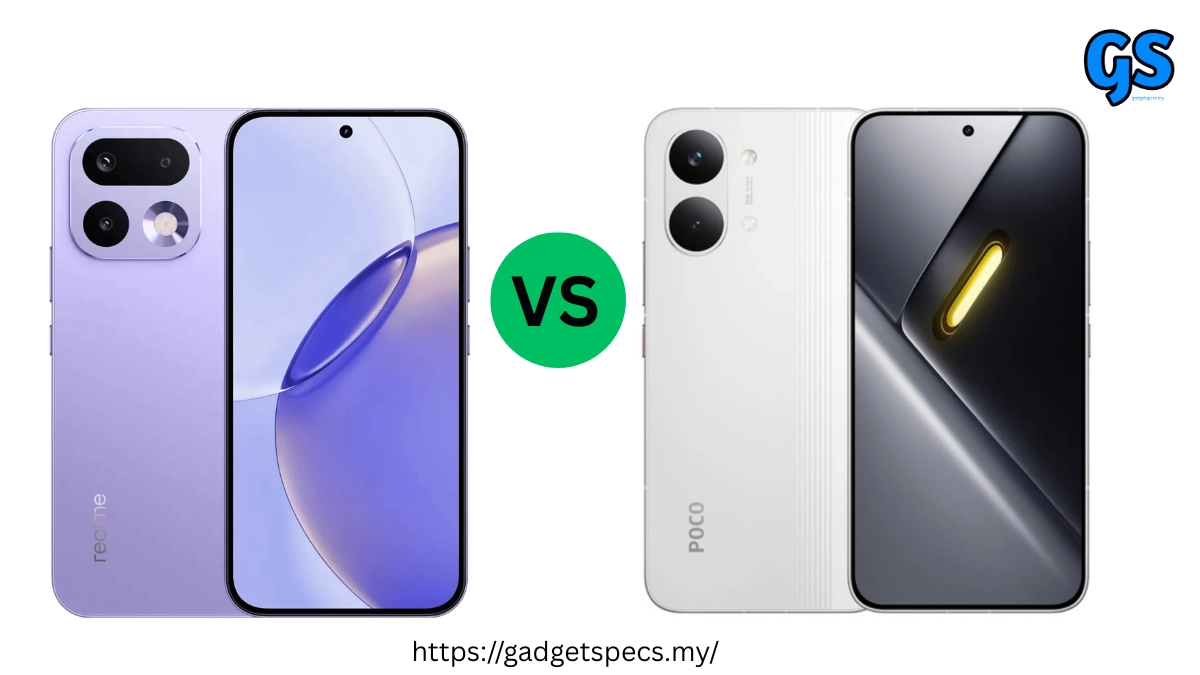
Realme 16 Pro vs POCO X8 Pro – Best Mid-Range Powerhouse of 2026?
The mid-range battlefield in Malaysia has never been more exciting. Two of the most powerful contenders in the RM 1,200 – RM 1,600 segment have arrived — the Realme 16 Pro and POCO X8 Pro. Both devices aggressively promise near-flagship performance, exceptional camera systems, and blazing fast charging at prices that make flagship buyers question their choices. But which one truly dominates in 2026?
After extensive real-world testing across Malaysia — from Kuala Lumpur’s busy streets to indoor gaming sessions and outdoor photography adventures — we’ve put both phones through every critical test. This comprehensive head-to-head breakdown covers display quality, raw performance, camera capability, battery endurance, software experience, build quality, and overall value to help you make the smartest mid-range investment decision this year.
⚡ Quick Verdict
Overall Winner: POCO X8 Pro — edges ahead through superior raw performance, better display technology, more powerful charging ecosystem, and stronger gaming credentials. However, the Realme 16 Pro fights back impressively with a more refined camera system, cleaner software experience, slimmer and lighter design, and slightly better pricing making it the smarter choice for camera-focused and design-conscious Malaysian buyers.
Price Comparison – Malaysia 2026
Understanding pricing across all storage variants is essential before diving into specification battles. Both phones target the competitive mid-range sweet spot in Malaysia, with pricing strategies that reflect their different market positioning and target audiences.
| Variant | Realme 16 Pro (RM) | POCO X8 Pro (RM) | Difference |
|---|---|---|---|
| Base Model | RM 1,199 | RM 1,299 | Realme saves RM 100 |
| Mid Variant | RM 1,399 | RM 1,499 | Realme saves RM 100 |
| Top Variant | RM 1,599 | RM 1,699 | Realme saves RM 100 |
Pricing Note: Prices based on official Malaysian retail listings at time of writing. Both brands frequently offer launch promotions, platform vouchers on Shopee and Lazada, and early bird bundles. Monitor official stores for the most current pricing before purchasing.
Full Specifications – Complete Side by Side
A thorough specification comparison reveals the engineering priorities of both brands and highlights exactly where each manufacturer chose to invest versus economize to hit their target price points in the competitive mid-range market.
Display Battle – 120Hz vs 144Hz AMOLED
Both phones feature AMOLED panels — a significant advantage over budget IPS LCD alternatives. However, POCO X8 Pro’s display specifications tell a notably different story with several meaningful advantages that matter particularly for gaming and outdoor usage scenarios common among Malaysian smartphone users.
Realme 16 Pro Display Highlights
- 2,000 nits Peak: Bright enough for Malaysia’s sunny outdoor conditions
- 120Hz Adaptive: Smooth scrolling conserving battery intelligently
- FHD+ Resolution: Sharp visuals for daily social media and streaming
- AMOLED Quality: Deep blacks and vibrant colors for media enjoyment
- Eye Comfort Certified: SGS certification for extended low-blue-light usage
- Slim Bezels: Near-bezel-free design maximizing usable screen area
POCO X8 Pro Display Highlights
- 3,000 nits Peak: Industry-leading brightness for mid-range segment
- 144Hz Adaptive: Noticeably smoother gaming and scrolling experience
- Higher Resolution: 2712 x 1220 pixels delivering sharper text and images
- Dolby Vision: Premium HDR standard for streaming Netflix and YouTube
- Gorilla Glass 5: Superior scratch and drop protection
- CrystalRes Technology: POCO’s display tuning for peak visual clarity
| Display Metric | Realme 16 Pro | POCO X8 Pro | Winner |
|---|---|---|---|
| Panel Type | AMOLED | AMOLED | TIE |
| Peak Brightness | 2,000 nits | 3,000 nits | POCO |
| Refresh Rate | 120Hz | 144Hz | POCO |
| Resolution | FHD+ 2412×1080 | FHD+ 2712×1220 | POCO |
| HDR Support | HDR10+ | Dolby Vision + HDR10+ | POCO |
| Glass Protection | Gorilla Glass | Gorilla Glass 5 | POCO |
| Screen Size | 6.7 inch | 6.67 inch | TIE |
| Eye Protection | SGS Certified | Standard | REALME |
POCO dominates the display category comprehensively — winning on brightness, refresh rate, resolution, HDR support, and glass protection. The 3,000 nits peak brightness and 144Hz refresh rate combination represents genuinely class-leading display specifications for the mid-range price segment in Malaysia’s 2026 market.
Performance Battle – Snapdragon 7s Gen 3 vs Snapdragon 8s Gen 3
This comparison features perhaps the most decisive specification gap in this entire matchup. The Snapdragon 8s Gen 3 powering the POCO X8 Pro represents a significantly more powerful chipset than the Snapdragon 7s Gen 3 in the Realme 16 Pro — creating real performance differences beyond mere benchmark numbers.
Snapdragon 7s Gen 3 – Realme 16 Pro
- 4nm Process: Efficient fabrication balancing performance and battery life
- Mid-Range Tier: Solid daily performance for social media and productivity
- Adreno 710 GPU: Competent mid-range graphics for casual gaming
- LPDDR4X RAM: Standard mid-range memory bandwidth
- UFS 2.2 Storage: Adequate app loading for typical usage scenarios
- Thermal Control: Efficient enough for moderate gaming sessions
Snapdragon 8s Gen 3 – POCO X8 Pro
- 4nm Process: TSMC fabrication with near-flagship efficiency
- Upper Mid-Range Tier: Genuine near-flagship performance levels
- Adreno 735 GPU: Significantly more powerful for gaming and video
- LPDDR5X RAM: Higher bandwidth memory for faster multitasking
- UFS 3.1 Storage: Noticeably faster app loading and file transfer
- LiquidCool 4.0: Advanced cooling system for sustained peak performance
Benchmark Results
| Benchmark Test | Realme 16 Pro | POCO X8 Pro | Winner |
|---|---|---|---|
| Geekbench Single-Core | ~960 | ~1,720 | POCO |
| Geekbench Multi-Core | ~3,050 | ~4,800 | POCO |
| AnTuTu Score | ~760,000 | ~1,450,000 | POCO |
| GPU (3DMark Wild Life) | ~3,700 | ~7,200 | POCO |
| RAM Type | LPDDR4X | LPDDR5X | POCO |
| Storage Speed | UFS 2.2 | UFS 3.1 | POCO |
| Sustained Gaming | Moderate throttle | Minimal throttle | POCO |
| Daily Smoothness | Very Good | Excellent | POCO |
POCO X8 Pro wins the performance category comprehensively and decisively. The Snapdragon 8s Gen 3 outperforms the 7s Gen 3 across every single benchmark by substantial margins — nearly doubling CPU and GPU scores. For gaming enthusiasts and power users demanding maximum performance from their mid-range purchase, POCO X8 Pro is the unambiguous choice.
Camera Battle – Realme’s Telephoto Advantage
Camera systems represent the most nuanced comparison between these two phones. Realme brings a dedicated telephoto lens that POCO completely lacks, while POCO relies on a stronger main sensor with superior image processing. This fundamental difference shapes each phone’s photographic identity and target audience.
Realme 16 Pro Camera System
- Sony LYT-600 Sensor: Premium Sony sensor with excellent light gathering
- Dedicated 3x Telephoto: True optical zoom missing entirely on POCO X8 Pro
- 50MP Telephoto: High-resolution zoom shots at 3x and digital beyond
- OIS Main Camera: Optical stabilization for sharp handheld shots
- 32MP Selfie: High-resolution front camera for detailed selfies
- Hasselblad-Inspired Tuning: Natural color science for true-to-life results
POCO X8 Pro Camera System
- Sony IMX906 Sensor: Flagship-grade sensor with superior low-light capability
- No Dedicated Telephoto: Relies on digital zoom only for distant subjects
- OIS Support: Optical stabilization for steady photography and video
- Leica-Tuned Colors: Precise color reproduction with authentic aesthetic
- AI Scene Enhancement: Intelligent scene detection and optimization
- Video Capability: 4K at 60fps with excellent stabilization
Camera Scenario Testing
| Camera Category | Realme 16 Pro | POCO X8 Pro | Winner |
|---|---|---|---|
| Main Sensor | Sony LYT-600 OIS | Sony IMX906 OIS | POCO |
| Telephoto Camera | 50MP 3x optical | ❌ Not available | REALME |
| Ultra Wide | 8MP f/2.2 | 8MP f/2.2 | POCO (slight) |
| Selfie Camera | 32MP f/2.0 | 20MP f/2.2 | REALME |
| Night Photography | Very Good | Excellent | POCO |
| Zoom Photography | 3x optical zoom | Digital zoom only | REALME |
| Portrait Mode | Natural optical bokeh | Digital simulation | REALME |
| Video Max | 4K @ 30fps | 4K @ 60fps | POCO |
| Video Stabilization | Good OIS | Excellent OIS | POCO |
| Color Science | Warm, natural | Accurate, Leica-tuned | Preference |
Realme wins the camera comparison through the decisive telephoto advantage — a hardware differentiator POCO simply cannot overcome with software processing alone. The dedicated 3x optical zoom enables genuinely better portrait photography, distant subject capture, and creative flexibility. Combined with the superior 32MP selfie camera, Realme delivers a more versatile and complete camera system for everyday Malaysian photography needs.
Battery Life & Charging Speed
Both phones deliver strong battery performance with fast charging capabilities that eliminate charging anxiety for most Malaysian users. However, subtle differences in capacity, charging speeds, and chip efficiency create meaningful real-world distinctions worth understanding before deciding.
| Battery Metric | Realme 16 Pro | POCO X8 Pro | Winner |
|---|---|---|---|
| Battery Capacity | 5,200 mAh | 5,110 mAh | REALME (slight) |
| Screen-On Time | ~10-12 hours | ~9-11 hours | REALME |
| Gaming Battery Drain | Moderate | Higher (powerful chip) | REALME |
| Wired Charging | 80W SUPERVOOC | 90W HyperCharge | POCO |
| 0-100% Time | ~48 minutes | ~42 minutes | POCO |
| 30-Min Charge | ~75% capacity | ~85% capacity | POCO |
| Wireless Charging | ❌ No | ❌ No | TIE |
| Charger Included | ✅ 80W in box | ✅ 90W in box | TIE |
| Battery Protection | Smart charge modes | Adaptive charging AI | TIE |
Real-World Battery Testing
- Realme 16 Pro: Achieved consistent 10-12 hours screen-on time across mixed daily usage
- POCO X8 Pro: Averaged 9-11 hours screen-on time with powerful 8s Gen 3 draining faster
- Gaming Test: Realme maintained 6-7 hours gaming; POCO lasted 5-6 hours due to powerful GPU
- Realme Charging: 0-100% in 48 minutes — excellent for daily top-up convenience
- POCO Charging: 0-100% in 42 minutes — class-leading speed for emergency charging
- Overnight Drain: Both phones lose approximately 2-3% during 8-hour standby
Realme wins on endurance through better battery efficiency from its less power-hungry processor. However, POCO wins on raw charging speed with 90W versus 80W. For daily users prioritizing all-day battery life, Realme is the better choice. For power users who charge frequently and need the fastest possible top-up, POCO’s 90W wins.
Software Experience – Realme UI 5.0 vs HyperOS
Software experience shapes daily satisfaction perhaps more than any hardware specification. Both Realme UI 5.0 and Xiaomi’s HyperOS represent mature Android skins with dedicated user bases, distinct design philosophies, and meaningful feature differences that affect real-world usage quality.
Realme UI 5.0 – Realme 16 Pro
- Clean Interface: Relatively minimal and uncluttered compared to HyperOS
- AI Features: AI tools for photography, summarization, and productivity
- Smart Sidebar: Floating quick-access panel for frequent applications
- Focus Mode: Distraction-free productivity mode for study and work
- Mini Capsule: Dynamic notification hub inspired by Dynamic Island
- Update Support: 3 years OS updates + 4 years security patches
- Bloatware Level: Moderate pre-installed apps — most removable
- Ad Policy: Occasional promotional notifications manageable in settings
HyperOS – POCO X8 Pro
- Feature Dense: Extensive customization options and built-in utilities
- POCO Launcher: Streamlined interface optimized for performance focus
- Game Turbo: Dedicated gaming optimization engine for competitive play
- Second Space: Separate secure profile for privacy-conscious users
- PC Connect: Mirror phone apps on Windows PC for productivity
- Update Support: 3 years OS updates + 4 years security patches
- Bloatware Level: Heavier pre-installation requiring cleanup
- Ad Policy: System ads present requiring manual disabling in settings
| Software Category | Realme UI 5.0 | HyperOS | Winner |
|---|---|---|---|
| UI Cleanliness | Clean, minimal | Feature-heavy | REALME |
| Customization Depth | Good options | Extensive options | POCO |
| Gaming Features | Basic game mode | Game Turbo advanced | POCO |
| AI Integration | Good AI tools | Comprehensive AI | POCO |
| System Ads | Minimal | Present (disableable) | REALME |
| Bloatware | Moderate | Heavier | REALME |
| Update Support | 3yr OS / 4yr security | 3yr OS / 4yr security | TIE |
| Privacy Controls | Good | Good | TIE |
| Stability | Very stable | Generally stable | REALME |
Realme UI 5.0 wins through cleaner presentation, fewer system advertisements, less bloatware, and more stable daily operation. However, POCO’s HyperOS provides superior gaming features, deeper customization, and more advanced AI integration for power users who prefer maximum feature density over software cleanliness.
Build Quality & Design
Physical design and build quality affect daily comfort, durability, and the premium feeling in hand. Both phones take distinctly different approaches to industrial design that reflect their brand identities and target user preferences.
| Build Feature | Realme 16 Pro | POCO X8 Pro | Winner |
|---|---|---|---|
| Front Glass | Gorilla Glass | Gorilla Glass 5 | POCO |
| Back Material | Vegan leather / Glass | Plastic | REALME |
| Frame Material | Aluminum alloy | Plastic frame | REALME |
| Water Resistance | IP65 | IP54 | REALME |
| Weight | 185g (lighter) | 204g (heavier) | REALME |
| Thickness | 7.8mm (slimmer) | 8.2mm | REALME |
| Premium Feel | Premium in hand | Gamer-focused aesthetic | REALME |
| Fingerprint Sensor | Under-display optical | Side-mounted | Preference |
| Stereo Speakers | ✅ Dolby Atmos | ✅ Dolby Atmos | TIE |
Realme wins convincingly through superior IP65 water resistance, lighter 185g weight, slimmer 7.8mm profile, premium vegan leather or glass back options, and aluminum frame construction. At just 185g, the Realme 16 Pro feels noticeably more comfortable during extended single-handed usage compared to POCO’s 204g gaming-focused build.
Gaming Performance – The Definitive Test
Gaming capability represents a critical purchasing consideration for a significant portion of Malaysian mid-range buyers. Both phones target gamers in their marketing, but their actual gaming credentials differ substantially due to processor differences.
Popular Games Testing Results
POCO X8 Pro wins the gaming category comprehensively thanks to the Snapdragon 8s Gen 3’s dramatically superior GPU performance, 144Hz display for smoother gameplay, LiquidCool 4.0 thermal management, and dedicated Game Turbo optimization software. For Malaysian mobile gamers who take gaming seriously, POCO X8 Pro is the clear and obvious choice without any meaningful competition from the Realme 16 Pro.
Complete Category Scorecard
| Category | Realme 16 Pro | POCO X8 Pro | Winner |
|---|---|---|---|
| Price Value | RM 1,199 start | RM 1,299 start | REALME ✅ |
| Display Quality | 2,000 nits, 120Hz | 3,000 nits, 144Hz | POCO ✅ |
| Raw Performance | SD 7s Gen 3 | SD 8s Gen 3 | POCO ✅ |
| Gaming Capability | Casual-Mid gaming | Near-flagship gaming | POCO ✅ |
| Main Camera | Sony LYT-600 | Sony IMX906 | POCO ✅ |
| Camera Versatility | 3x optical telephoto | No telephoto | REALME ✅ |
| Night Photography | Very Good | Excellent | POCO ✅ |
| Selfie Camera | 32MP f/2.0 | 20MP f/2.2 | REALME ✅ |
| Video Recording | 4K @ 30fps | 4K @ 60fps | POCO ✅ |
| Battery Endurance | ~11 hrs SOT | ~10 hrs SOT | REALME ✅ |
| Charging Speed | 80W (48 min) | 90W (42 min) | POCO ✅ |
| Software Quality | Realme UI 5.0 clean | HyperOS feature-rich | REALME ✅ |
| Build Quality | Aluminum + IP65 | Plastic + IP54 | REALME ✅ |
| Design & Weight | 185g, 7.8mm slim | 204g, 8.2mm thick | REALME ✅ |
| Overall Value | Camera + build focus | Performance focus | POCO ✅ |
Who Should Buy Which Phone?
- Love photography and specifically need optical zoom for portraits and distant subjects
- Want a premium-feeling slim and lightweight phone at 185g and 7.8mm thickness
- Prefer cleaner software with fewer advertisements and less bloatware daily
- Need better water resistance with IP65 for rain and splash protection confidence
- Value longer battery endurance throughout the entire day without charging anxiety
- Take frequent selfies and want the highest-resolution 32MP front camera available
- Prefer stylish vegan leather back design over plastic gaming-focused aesthetic
- Are a casual to moderate gamer who doesn’t demand maximum frame rates consistently
- Are a dedicated mobile gamer wanting maximum performance for PUBG, Genshin, COD
- Want the best possible display with 144Hz and 3,000 nits brightness in mid-range
- Need superior main camera performance especially in low-light night photography
- Require 4K at 60fps video recording capability for content creation projects
- Want the absolute fastest possible charging at 90W for emergency top-ups
- Prefer maximum storage at 512GB for large game libraries and media collections
- Enjoy deep customization through HyperOS extensive settings and options
- Want near-flagship processing power without paying flagship prices in Malaysia
Final Verdict – Which Phone Wins in 2026?
🏆 Overall Winner: POCO X8 Pro
The POCO X8 Pro wins the overall comparison 8-7 categories, claiming victory through
superior display technology, dramatically more powerful processor, better gaming performance,
stronger main camera sensor, faster 4K video recording, and faster charging speed.
For Malaysian buyers who demand the absolute maximum performance from their mid-range
investment — particularly gamers and power users — the POCO X8 Pro delivers
near-flagship capabilities at a genuinely mid-range price point.
🥈 Strong Contender: Realme 16 Pro
The Realme 16 Pro loses the overall count but wins where it matters deeply for
photography enthusiasts and design-conscious buyers — optical zoom telephoto camera,
selfie quality, build premium, slim design, software cleanliness, and water resistance.
For Malaysian buyers who prioritize camera versatility, premium aesthetics, and
all-day battery endurance over raw gaming performance, the Realme 16 Pro is
arguably the smarter, more balanced choice at RM 100 less.
Frequently Asked Questions
Which is better overall, Realme 16 Pro or POCO X8 Pro?
The POCO X8 Pro wins the overall comparison 8-7 categories through superior display, significantly more powerful Snapdragon 8s Gen 3 processor, better gaming performance, and faster video recording. However, the Realme 16 Pro wins for camera versatility with optical zoom, better build quality, cleaner software, and longer battery endurance. Your usage priority determines the better choice for you personally.
What is the price difference in Malaysia?
The Realme 16 Pro starts at RM 1,199 while POCO X8 Pro begins at RM 1,299 — a consistent RM 100 difference across all storage variants. While not a dramatic gap, Realme provides marginally better value pricing while POCO justifies its premium through the significantly more powerful Snapdragon 8s Gen 3 chipset.
Which has better camera zoom capability?
Realme 16 Pro wins zoom photography decisively — it features a dedicated 50MP telephoto camera with 3x optical zoom that POCO X8 Pro completely lacks. POCO relies solely on digital zoom from the main sensor, which cannot match the quality of Realme’s optical telephoto for portraits and distant subject photography.
Which phone is better for gaming?
POCO X8 Pro dominates gaming comprehensively — the Snapdragon 8s Gen 3 delivers nearly double the GPU performance of Realme’s 7s Gen 3, supported by a 144Hz display, LiquidCool 4.0 thermal management, and dedicated Game Turbo optimization. For competitive gaming in PUBG Mobile, Genshin Impact, or COD Mobile at maximum settings, POCO X8 Pro is the only real choice between these two phones.
Which lasts longer on a single charge?
Despite slightly larger 5,200 mAh capacity versus POCO’s 5,110 mAh, Realme 16 Pro achieves better real-world battery life — approximately 10-12 hours versus POCO’s 9-11 hours screen-on time. The less power-hungry Snapdragon 7s Gen 3 processor consumes battery more efficiently than POCO’s powerful Snapdragon 8s Gen 3.
Which has better water resistance?
Realme 16 Pro wins water resistance with IP65 rating providing full dust protection and protection against water jets from any direction. POCO X8 Pro carries only IP54 rating offering limited dust protection and basic splash resistance. For Malaysian users worried about rain or accidental water exposure, Realme’s IP65 provides meaningfully superior protection.
Does POCO X8 Pro have better display than Realme 16 Pro?
Yes, significantly — POCO X8 Pro’s display wins on every key metric: 3,000 nits peak brightness versus Realme’s 2,000 nits, 144Hz refresh rate versus 120Hz, higher screen resolution, Dolby Vision HDR support, and Gorilla Glass 5 protection versus standard Gorilla Glass. For display quality and gaming visuals, POCO X8 Pro is clearly superior.
Which software experience is better?
Realme UI 5.0 provides a cleaner, less cluttered experience with fewer system advertisements and less bloatware. HyperOS on POCO X8 Pro offers deeper customization and more advanced features including Game Turbo and Second Space, but includes system ads requiring manual disabling. For clean daily experience, Realme wins. For feature depth and customization, POCO wins.