
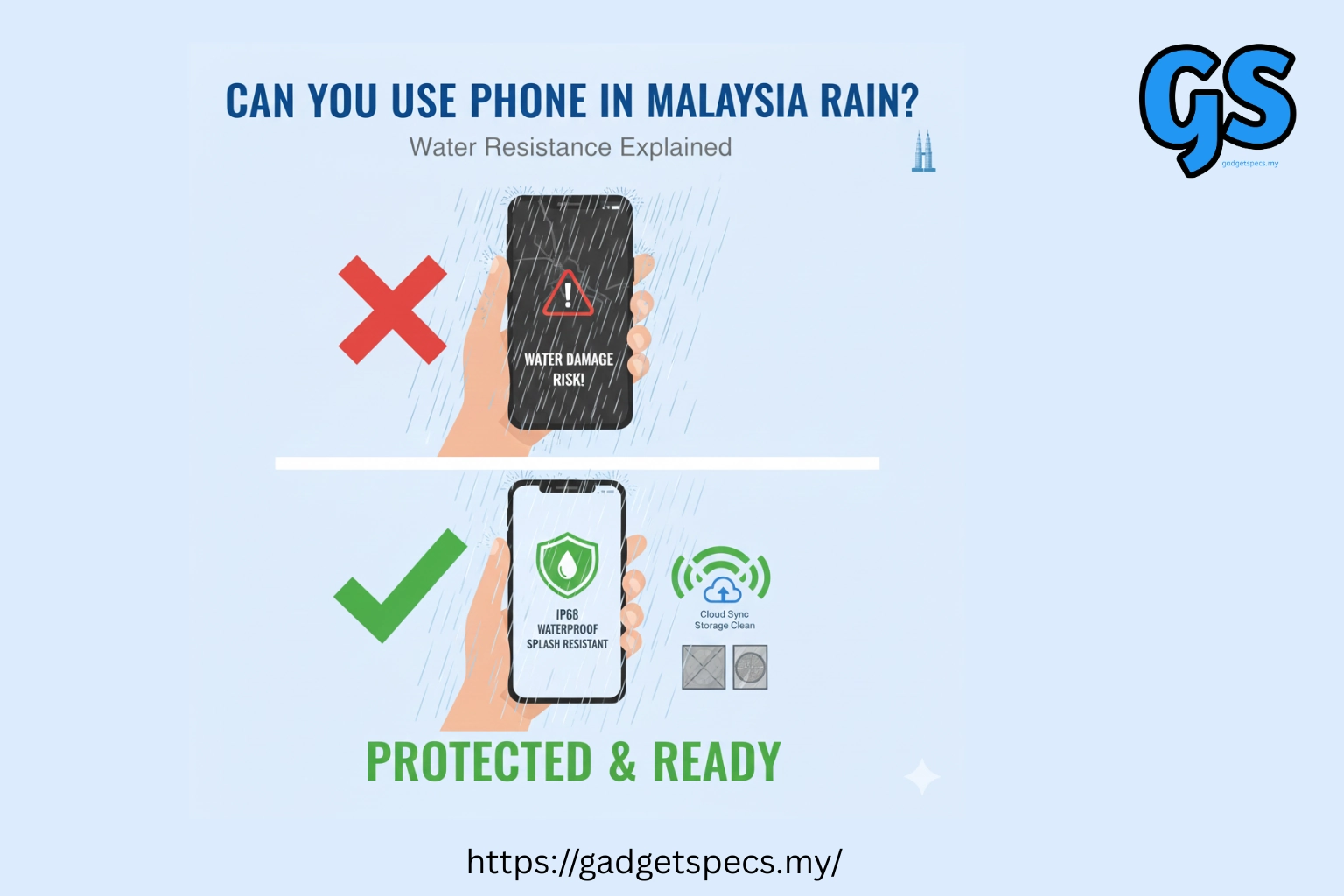
Can You Use Your Phone in Malaysia Rain? Water Resistance Explained
Malaysia’s tropical climate brings sudden heavy rain almost daily, especially during monsoon season (November-February). Many Malaysians wonder: “Can I use my phone in the rain?”, “Is my phone waterproof?”, and “What happens if my phone gets wet?”. The answers depend entirely on your phone’s IP (Ingress Protection) rating — a standardized measurement of water and dust resistance.
This comprehensive guide explains IP ratings in plain language, reveals which phones can safely handle Malaysia’s rain, dispels common waterproof myths, and provides practical advice for protecting your smartphone from water damage. Whether you’re caught in a sudden downpour in KL, riding a motorcycle in Penang rain, or worried about humidity damage, this guide helps you understand your phone’s water resistance capabilities.
Quick Answer: Using Phone in Malaysia Rain
IP68/IP69 phones: Safe to use in heavy rain, can survive accidental drops in puddles.
IP67 phones: Safe in moderate rain for short periods, avoid prolonged exposure.
IP54/IP55 phones: Splash-resistant only — light rain okay briefly, avoid heavy rain.
No IP rating: NOT safe in rain — keep dry at all costs, use umbrella or waterproof case.
IP Rating Explained – What Do the Numbers Mean?
IP stands for “Ingress Protection” — a two-digit code that indicates how well a device resists solid particles (dust) and liquids (water). The format is always IP followed by two numbers:
First Digit: Dust Protection (0-6)
| Rating | Protection Level | Meaning |
|---|---|---|
| 0 | No protection | Completely exposed to dust |
| 4 | Protected against particles >1mm | Small debris protection |
| 5 | Dust protected | Limited dust ingress (harmless) |
| 6 | Dust-tight | No dust ingress whatsoever |
Second Digit: Water Protection (0-9)
| Rating | Protection Level | Real-World Meaning |
|---|---|---|
| 0 | No protection | Any water exposure = damage |
| 4 | Splash resistant | Light rain okay briefly, avoid heavy rain |
| 5 | Water jets resistant | Moderate rain okay, can rinse briefly |
| 6 | Powerful water jets | Heavy rain safe, strong water spray okay |
| 7 | Immersion up to 1m (30 min) | Can survive accidental drop in shallow water |
| 8 | Immersion beyond 1m (varies) | Can survive underwater (1.5m typical, 30 min) |
| 9 | High-pressure water jets | Withstands high-pressure cleaning (rare in phones) |
Common IP Ratings in Malaysian Smartphones
IP68 – The Gold Standard
- Water Protection: Submersion in 1.5 meters of water for 30 minutes
- Dust Protection: Completely dust-tight
- Real-World Use: Perfectly safe in Malaysia’s heaviest rain, can survive accidental toilet/pool drops
- Examples: iPhone 15/16 series, Samsung Galaxy S26/S24, Google Pixel 8/9, Xiaomi 14/15 Pro
- Limitations: Not designed for swimming, seawater exposure, or hot water
IP67 – Very Good Protection
- Water Protection: Submersion in 1 meter of water for 30 minutes
- Dust Protection: Completely dust-tight
- Real-World Use: Safe in heavy rain, can survive brief accidental water exposure
- Examples: iPhone 13/14 standard models, older Samsung flagships
- Difference from IP68: 0.5m less water depth — functionally similar for daily use
IP54/IP55 – Splash Resistant Only
- Water Protection: Splash resistant from any direction (IP54) or low-pressure water jets (IP55)
- Dust Protection: Limited dust protection (not dust-tight)
- Real-World Use: Can handle light rain briefly, sweat, accidental spills — NOT for heavy rain or submersion
- Examples: Many mid-range phones (Samsung Galaxy A-series, OPPO A-series, Realme budget models)
- Caution: Don’t deliberately use in rain — seek shelter immediately
IP69 – Military-Grade (Rare)
- Water Protection: High-pressure, high-temperature water jets
- Dust Protection: Completely dust-tight
- Real-World Use: Designed for industrial/rugged use, overkill for normal users
- Examples: Rugged phones (CAT phones, Samsung Galaxy XCover), some Chinese flagships (Realme GT 7 Pro)
- Note: IP69 doesn’t replace IP68 — phones often have both ratings (IP68 + IP69)
No IP Rating – Not Water Resistant
- Protection: None — any water exposure risks damage
- Examples: Most budget phones under RM1,000, older phones pre-2020
- Action Required: ALWAYS keep dry, use waterproof case in rain, avoid humid environments
Using Your Phone in Malaysia Rain – Practical Guide
Light Rain (Drizzle)
- IP68/IP67: ✅ Completely safe, use normally
- IP54/IP55: ✅ Safe for short periods (5-10 minutes), wipe dry after
- No IP rating: ❌ Avoid — seek shelter or use umbrella
Heavy Rain (Typical Malaysia Afternoon Storm)
- IP68/IP67: ✅ Safe to use, phone can handle it — but minimize exposure time unnecessarily
- IP54/IP55: ⚠️ Risky — seek shelter immediately, don’t actively use phone
- No IP rating: ❌ Dangerous — keep phone in bag/pocket, protected from rain
Monsoon/Thunderstorm (Extreme Heavy Rain)
- IP68/IP67: ✅ Phone survives but minimize screen use (water droplets interfere with touch)
- IP54/IP55: ❌ Not safe — protect phone completely
- No IP rating: ❌ Extreme danger — wrap in plastic bag or keep in waterproof pouch
Motorcycle Riding in Rain
- IP68/IP67: Phone survives but not recommended — water at speed can penetrate ports over time
- IP54/IP55: ❌ Not safe — use waterproof phone mount with cover
- No IP rating: ❌ Absolutely not — keep in waterproof bag
What Happens If Your Phone Gets Wet?
Immediate Actions (First 5 Minutes Critical)
- Turn Off Immediately: Power down phone right away to prevent short circuits
- Remove Case: Take off protective case to allow water to escape
- Dry Exterior: Wipe phone thoroughly with dry cloth, pay attention to ports
- Remove SIM/SD Card: Take out SIM tray to allow airflow into device
- Don’t Shake: Shaking can push water deeper into internal components
Drying Methods (Next 24-48 Hours)
- ✅ Air Dry: Place phone in dry, warm area with good airflow for 24-48 hours
- ✅ Silica Gel Packets: Surround phone with silica gel (from shoe boxes, etc.) to absorb moisture
- ✅ Fan Drying: Point fan at phone (not too close) to encourage evaporation
- ⚠️ Rice Method: Popular but not ideal — rice dust can enter ports, silica gel better
- ❌ Hair Dryer: NEVER use — heat can damage internal components and LCD screen
- ❌ Microwave/Oven: Obviously never — will destroy phone completely
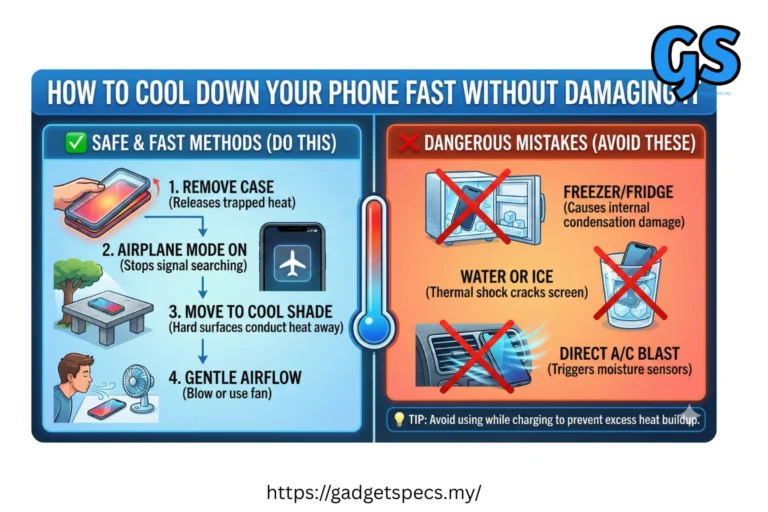
- ❌ Freezer: Don’t freeze — condensation causes more damage
When to Power On
- Minimum Wait: 24 hours air drying for splash exposure
- Recommended: 48 hours for submersion or heavy water exposure
- Test Carefully: If phone doesn’t turn on after 48 hours, seek professional repair
- Phone has existing cracks or damage (compromises water seals)
- Exposed to hot water (IP ratings test fresh water at room temperature)
- Exposed to saltwater/seawater (corrosive, damages seals faster)
- Ports are open (charging port flap, SIM tray not fully inserted)
- Phone has been dropped previously (may have invisible seal damage)
Common Water Resistance Myths – Debunked
Myth #1: “IP68 means my phone is waterproof”
❌ FALSE. IP68 means water-resistant, not waterproof. It can survive accidental exposure but isn’t designed for swimming, diving, or intentional submersion. Waterproof implies total protection under any conditions — no consumer smartphone is truly waterproof.
Myth #2: “I can take underwater photos in the pool”
⚠️ RISKY. While IP68 phones technically survive underwater, manufacturers don’t recommend it. Chlorine in pools and salt in seawater degrade rubber seals faster than fresh water. Some phones have dedicated underwater photography modes (Sony Xperia) but most don’t.
Myth #3: “Water resistance lasts forever”
❌ FALSE. Water resistance degrades over time due to:
- Normal wear and tear on rubber seals
- Drops and impacts (even if phone looks fine externally)
- Temperature changes (heat/cold affects seal integrity)
- Age (seals deteriorate after 2-3 years)
A brand new IP68 phone is much more water-resistant than a 3-year-old IP68 phone.
Myth #4: “Warranty covers water damage”
❌ FALSE (mostly). Even phones with IP68 rating typically DON’T cover water damage under warranty. IP rating indicates capability, but manufacturers consider water damage “accidental” or “user-caused” and void warranty. Always check warranty terms carefully.
Myth #5: “IP54 is enough for Malaysia rain”
⚠️ RISKY. IP54 handles light rain briefly but Malaysia’s sudden heavy downpours can overwhelm splash resistance. For regular outdoor use in Malaysia, IP67 minimum is recommended, IP68 ideal.
Phones with Best Water Resistance in Malaysia 2026
IP68 Flagship Phones
- iPhone 16 Pro / 16 Pro Max: IP68 (6m depth, 30 min) — Best in class
- Samsung Galaxy S26 / S26 Ultra: IP68 (1.5m, 30 min)
- Google Pixel 9 Pro: IP68 (1.5m, 30 min)
- Xiaomi 15 Pro: IP68 (1.5m, 30 min)
- Sony Xperia 1 VII: IP68 (1.5m, 30 min) — Designed for underwater use
IP68 + IP69 Extreme Protection
- Realme GT 7 Pro: IP68 + IP69 — Handles high-pressure water
- Samsung Galaxy XCover 7: IP68 + MIL-STD-810H — Rugged design
IP67 Good Protection
- iPhone 15 / 15 Plus: IP68 actually (1m, 30 min)
- Older Flagships: iPhone 13/14, Galaxy S22/S23
IP54/IP55 Budget Options
- Samsung Galaxy A56: IP54
- OPPO A6 Pro: IP54
- Realme P4x: IP54
- Note: Splash resistant only — not for heavy rain
For comprehensive waterproof phone guides, see best waterproof phones in Malaysia, iPhone models, and Samsung phones.
Protecting Non-Waterproof Phones in Malaysia
If your phone lacks IP rating or has only IP54, take these precautions:
Waterproof Cases & Pouches
- Waterproof Cases: RM50-150 — Full protection with touch screen functionality (Spigen, OtterBox)
- Waterproof Pouches: RM20-50 — Universal fit, good for swimming/beach (available on Shopee/Lazada)
- Ziplock Bags: RM5 — Emergency solution, allows basic touch through plastic
Daily Precautions
- Always carry small umbrella in Malaysia (sudden rain common)
- Keep phone in bag when walking in rain, not in hand
- Use waterproof phone mount for motorcycles
- Avoid using phone in bathroom (steam damages internal components over time)
- Don’t charge phone in humid areas (bathroom, kitchen during cooking)
Malaysia-Specific Tips
- Monsoon Season: Extra careful Nov-Feb (heaviest rain period)
- Humidity: Use phone in air-conditioned spaces when possible — Malaysia’s 80%+ humidity can cause condensation inside non-sealed phones
- Beach Trips: Even IP68 phones risk saltwater damage — rinse with fresh water immediately after beach exposure
Frequently Asked Questions
Can I use my IP68 phone in the shower?
Technically yes, but NOT recommended. Hot water and steam aren’t covered by IP68 testing (which uses fresh water at room temperature). Prolonged exposure to hot water can damage seals faster. Additionally, soap/shampoo may corrode gaskets over time.
My phone got wet but still works — should I worry?
Yes. Even if phone appears to work, internal moisture can cause corrosion over days/weeks, leading to eventual failure. Follow the drying procedures (power off, air dry 24-48 hours) even if phone seems fine. Water damage often manifests later as random shutdowns, battery issues, or screen problems.
Does phone case affect water resistance?
Regular cases (non-waterproof) don’t improve water resistance. In fact, they can trap water against the phone. After water exposure, remove case immediately to allow proper drying. Only dedicated waterproof cases (Lifeproof, OtterBox Defender) enhance protection beyond phone’s native IP rating.
Can I charge phone immediately after rain exposure?
NO! Never charge a wet phone. Wait minimum 3-4 hours for ports to dry completely. Charging wet ports risks short circuits and permanent damage. If moisture detected, modern phones show “moisture detected in charging port” warning — heed this warning and wait.
How do I know if my phone has water damage?
Check the Liquid Contact Indicator (LCI) — a small sticker in the SIM tray that turns red/pink when exposed to water. White/silver = no water exposure. Red/pink = water damage. This sticker helps repair shops determine if damage is water-related (voids warranty).
Is rice method effective for wet phones?
Partially effective but not optimal. Rice absorbs moisture slowly and rice dust can enter ports causing additional problems. Silica gel packets (from shoe boxes, vitamin bottles) work better. Best method: air drying in warm, well-ventilated area for 48 hours. For phone care tips, see smartphone care guide.
Final Recommendations for Malaysia Users
For Outdoor Workers / Delivery Riders
Minimum: IP67 rating essential
Recommended: IP68 + waterproof case for extra protection
Best: IP68 + IP69 phones (Realme GT 7 Pro, rugged phones)
For Regular Users (Office, Students)
Minimum: IP54 acceptable if careful
Recommended: IP67/IP68 for peace of mind in sudden rain
Budget Option: Non-IP phone + waterproof case (RM50)
For Beach/Pool Enthusiasts
Must Have: IP68 rating minimum
Better: IP68 + dedicated waterproof case for swimming
Best: Sony Xperia with underwater photography features


One Comment