
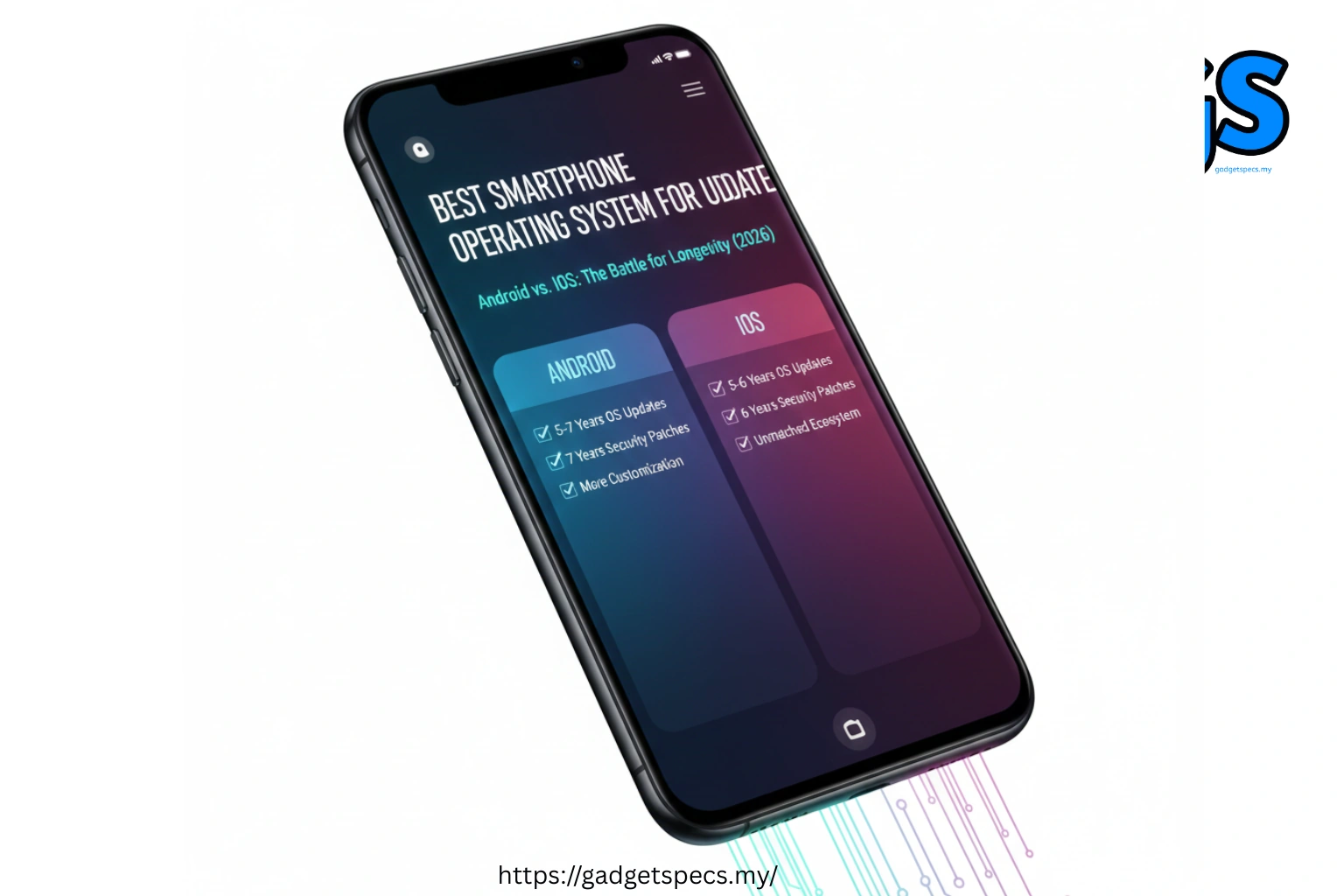
Best Smartphone Operating System for Updates (2026)
Wondering which smartphone operating system provides the longest and most reliable software updates? Undoubtedly, update support has become a crucial factor when choosing a new phone. Long-term updates ensure security patches, new features, and sustained performance throughout your device’s lifespan.
In this comprehensive guide, we’ve analyzed update policies from Apple, Google, Samsung, and other major manufacturers. Whether you prioritize security updates, major OS upgrades, or timely delivery, this comparison will help you choose the operating system that keeps your phone fresh for years to come.
Quick Answer: Which OS Updates Best?
Apple iOS currently leads with 6-7 years of software updates delivered simultaneously to all devices. Meanwhile, Google Pixel now offers 7 years of guaranteed updates on newer models. Furthermore, Samsung Galaxy provides 5 years OS updates plus 6 years security patches. In contrast, most other Android manufacturers offer 2-4 years of updates with slower rollout schedules.
Software Update Comparison – Major Brands (2026)
| Brand / OS | OS Updates | Security Updates | Update Speed | Overall Rating |
|---|---|---|---|---|
| Apple iOS | 6-7 years | 6-7 years | Same day globally | ⭐⭐⭐⭐⭐ Excellent |
| Google Pixel | 7 years | 7 years | Immediate | ⭐⭐⭐⭐⭐ Excellent |
| Samsung Galaxy | 5 years | 6 years | 1-2 months delay | ⭐⭐⭐⭐ Very Good |
| OnePlus | 4 years | 5 years | 2-3 months delay | ⭐⭐⭐⭐ Good |
| Xiaomi | 3-4 years | 4 years | 3-6 months delay | ⭐⭐⭐ Average |
| Oppo / Realme | 3 years | 4 years | 3-6 months delay | ⭐⭐⭐ Average |
| Budget Brands | 2 years | 3 years | 6-12 months delay | ⭐⭐ Below Average |
Apple iOS – Industry-Leading Update Support 6-7 Years
Apple’s iOS consistently ranks as the best operating system for software updates. Firstly, every iPhone receives updates simultaneously on release day regardless of carrier or region. Secondly, Apple supports devices for an impressive 6-7 years with both major OS updates and critical security patches.
Why iOS Updates Excel
Apple’s vertical integration gives them complete control over both hardware and software. Consequently, they can optimize updates perfectly for each device generation. Moreover, their unified ecosystem means no carrier delays or manufacturer modifications slowing down the update process.
- Same-Day Rollout: Every compatible iPhone gets updates simultaneously on launch day
- Long Support Window: iPhone 8 from 2017 still received iOS 16 in 2023 (6 years)
- Feature Parity: Older devices receive most new features, not just security fixes
- No Fragmentation: Over 90% of active iPhones run latest iOS within months
- Beta Access: Public beta program lets users test updates early
- Rapid Security Fixes: Critical vulnerabilities patched within days globally
Real-World Update History
- iPhone 8 (2017): Received updates until iOS 16 (2023) – 6 full years
- iPhone XS (2018): Expected to receive iOS 18 (2024) – 6+ years projected
- iPhone 11 (2019): Currently on iOS 17, will likely get iOS 19 (2025) – 6-7 years
- iPhone 13/14/15: Guaranteed support through at least 2028-2030
iOS Update Limitations
While iOS updates are exemplary, some considerations exist. Notably, older devices sometimes lose certain features in new updates due to hardware limitations. Additionally, major iOS updates occasionally introduce bugs that require subsequent patches to fix properly.
Google Pixel – 7 Years of Guaranteed Updates 7 Years
Google Pixel phones have dramatically improved their update game recently. In fact, Pixel 8 series introduced an industry-leading 7-year update commitment for Android devices. Moreover, as the maker of Android, Google delivers updates instantly without waiting for carrier or manufacturer approval.
Google Pixel Update Advantages
- Record Android Support: 7 years surpasses all other Android manufacturers significantly
- Instant Updates: First to receive new Android versions on release day
- Feature Drops: Quarterly updates add new capabilities beyond major Android releases
- Pure Android Experience: No bloatware or manufacturer modifications delaying updates
- Monthly Security: Consistent monthly security patches arrive punctually
- Beta Program: Early access to upcoming Android versions for testing
Pixel Update Timeline
Google’s commitment has evolved significantly over the years. Initially, Pixel phones received only 3 years of updates. However, recent models show Google’s serious long-term commitment to matching iOS support standards.
- Pixel 6/7 (2021-2022): 5 years of updates promised
- Pixel 8/8 Pro (2023): Revolutionary 7 years of updates guaranteed
- Future Pixels: Expected to maintain 7-year support standard
- Feature Drops: Quarterly updates add camera improvements, AI features, productivity tools
Pixel vs iOS Updates
While Pixel now matches iOS in duration, some differences remain. For instance, iOS updates typically include more features for older devices. Furthermore, Apple’s larger installed base means third-party apps support older iOS versions longer than equivalent Android versions.
Samsung Galaxy – Premium Android Updates 5 OS + 6 Security
Samsung has significantly improved their update commitment in recent years. Currently, flagship Galaxy phones receive 5 major Android updates plus 6 years of security patches. While not quite matching Google Pixel, this represents excellent support for the broader Android ecosystem.
Samsung Update Strengths
- Long Support Period: 5+6 years rivals iOS for Android manufacturers
- Wide Device Coverage: Even mid-range A-series gets 4 years OS + 5 years security
- Consistent Schedule: Reliable monthly security patches for flagship devices
- One UI Features: Samsung adds exclusive features beyond stock Android
- Regional Consistency: Most markets receive updates on similar timeline
- Beta Programs: Galaxy users can test updates before official release
Samsung Update Coverage
Importantly, Samsung’s update policy varies by device tier. Flagship S and Z series receive maximum support, whereas budget models get reduced coverage. Therefore, checking your specific model’s policy is essential.
- Galaxy S22/S23/S24: 5 major updates + 6 years security (until 2028-2030)
- Galaxy Z Fold/Flip: Same flagship support as S series
- Galaxy A5x Series: 4 major updates + 5 years security
- Budget A-series: 2-3 major updates + 4 years security
- Tablets: Premium Tab S series gets flagship-level support
Update Speed Considerations
Unlike Google Pixel, Samsung updates arrive with some delay after Google releases new Android versions. Specifically, major updates typically arrive 1-2 months after initial release. However, this allows Samsung to thoroughly test One UI integration and fix early bugs before rollout.
Other Android Manufacturers – Update Comparison
Beyond the top three, various Android manufacturers offer different update commitments. Generally, Chinese brands have improved significantly but still lag behind Samsung and Google in long-term support.
OnePlus – Good Flagship Support
OnePlus now promises 4 major Android updates plus 5 years of security patches for flagship devices. While shorter than Samsung, this represents solid support for premium phones. Moreover, OnePlus typically delivers updates faster than other Chinese manufacturers.
- Update Commitment: 4 OS updates + 5 years security (flagship)
- Update Speed: Usually 2-3 months after Google release
- OxygenOS Quality: Generally clean Android experience with useful additions
- Regional Variations: Some markets receive updates slower than others
Xiaomi – Inconsistent Performance
Xiaomi’s update policy varies significantly by device and region. Flagship models typically receive 3-4 major updates, whereas budget devices often get only 2 updates. Furthermore, MIUI updates sometimes arrive 3-6 months after Android releases, frustrating users wanting latest features.
- Flagship Support: 3-4 major updates + 4 years security
- Mid-Range: 2-3 updates with delayed timeline
- Budget Devices: Often only 2 Android updates
- MIUI Updates: Frequent but sometimes buggy initially
Oppo, Realme, Vivo – Basic Support
These BBK-owned brands generally offer 3 major updates and 4 years security for premium models. However, mid-range and budget devices frequently receive only 2 Android updates. Additionally, ColorOS, Realme UI, and Funtouch OS updates often arrive 4-6 months after Google’s Android release.
Budget Brands – Minimal Updates
Budget-focused brands like Infinix, Tecno, and generic Chinese manufacturers typically provide only 1-2 Android updates. Consequently, these phones become outdated quickly despite low purchase prices. Therefore, buyers should factor minimal update support into their budget phone decisions.
Why Software Updates Actually Matter
Many buyers overlook update policies when choosing phones. However, software support significantly impacts your device’s long-term value, security, and functionality. Let’s explore why updates deserve serious consideration.
Security Protection
Security patches fix vulnerabilities that hackers exploit to steal personal data. Without regular updates, your phone becomes increasingly vulnerable to malware, data breaches, and unauthorized access. Consequently, phones without security updates pose serious privacy risks.
- Banking Apps: Many banking apps refuse to run on outdated, insecure OS versions
- Personal Data: Unpatched vulnerabilities expose photos, messages, passwords to theft
- Malware Protection: Security updates include defense against new malware variants
- Privacy Features: Updates add better privacy controls and tracking prevention
New Features & Improvements
Major OS updates bring new capabilities, improved performance, and better battery optimization. Furthermore, staying current ensures compatibility with latest apps and services that require recent OS versions.
- App Compatibility: Many apps eventually drop support for old Android/iOS versions
- Performance Gains: Updates often include speed improvements and bug fixes
- Battery Optimization: New OS versions typically improve battery management
- UI Enhancements: Fresh designs and usability improvements keep phones feeling modern
Resale Value Impact
Phones with longer update support maintain higher resale value. Specifically, buyers prefer devices that will continue receiving updates after purchase. Therefore, iPhones and Pixels command premium resale prices partly due to their excellent update track records.
Choosing the Right OS for Your Update Needs
Choose iOS If You Want:
- Maximum Update Duration: Guaranteed 6-7 years of full support
- Same-Day Updates: Immediate access to new features globally
- Feature Parity: Older devices receive most new capabilities
- Long-Term Investment: Plan to keep phone 5+ years
- Ecosystem Integration: Already use Mac, iPad, Apple Watch
- Premium Experience: Don’t mind higher upfront cost for better support
Choose Google Pixel If You Want:
- Android Longevity: 7 years matches iOS on newer models
- Pure Android: Prefer stock experience over manufacturer skins
- Early Updates: First to receive new Android versions
- Feature Drops: Quarterly updates add ongoing improvements
- Google Integration: Heavily invested in Google ecosystem
- Best Camera: Want excellent photography with long-term support
Choose Samsung Galaxy If You Want:
- Solid Android Support: 5+6 years sufficient for most users
- Device Variety: Wider selection than Pixel (foldables, more sizes)
- One UI Features: Prefer Samsung’s additions over stock Android
- S Pen Support: Need stylus functionality with good updates
- Ecosystem Options: Want watches, earbuds, tablets from same brand
Consider Other Brands If:
- Budget Priority: Need affordable phone and can accept shorter support
- Frequent Upgrader: Plan to buy new phone every 2-3 years anyway
- Feature Focus: Specific features outweigh update concerns (fast charging, unique cameras)
- Regional Availability: Top brands not available or too expensive in your market
Future Update Trends & Predictions
Industry Moving Toward Longer Support
The smartphone industry is gradually embracing extended update commitments. Notably, Google Pixel’s 7-year promise pressures competitors to improve their policies. Consequently, we expect more manufacturers extending support periods throughout 2026 and beyond.
Regulatory Pressure Increasing
European regulations now require longer software support for electronic devices. Similarly, environmental concerns push manufacturers toward extended device lifespans through better update support. Therefore, legal requirements will likely mandate minimum update periods globally.
AI Features Driving Updates
Artificial intelligence capabilities require regular updates to improve performance and add features. Furthermore, on-device AI processing demands ongoing optimization through software updates. Thus, AI integration strengthens the case for longer update commitments.
Final Verdict: Best OS for Updates
Winner: Tie Between iOS and Google Pixel
Both operating systems now offer exceptional 6-7 year update commitments with reliable delivery. Consequently,
choosing between them depends on ecosystem preferences rather than update quality. iOS suits Apple ecosystem users,
whereas Pixel serves Android enthusiasts perfectly.
Runner-Up: Samsung Galaxy
Samsung’s 5+6 year commitment provides excellent long-term support for Android users wanting more device variety
than Pixel offers. While slightly shorter than iOS/Pixel, this duration satisfies most users’ needs comfortably.
Acceptable Alternatives: OnePlus, Xiaomi Flagship
These brands offer 3-4 years of updates suitable for users who upgrade every 3 years. However, expect slower
update delivery and potentially inconsistent quality compared to top three.
Avoid for Long-Term Use: Budget Brands
Manufacturers promising only 2 years updates leave devices vulnerable quickly. Therefore, if keeping your phone
beyond 2 years, avoid these brands regardless of attractive pricing.
Frequently Asked Questions
Which phone gets updates longest?
Currently, Google Pixel 8 series leads with 7 years of guaranteed updates. Meanwhile, iOS devices receive 6-7 years of support historically. Furthermore, Samsung flagships now offer 5 years OS updates plus 6 years security patches.
Do Android phones get updates slower than iPhones?
Yes, most Android phones receive major updates 1-6 months after Google releases them. However, Google Pixel devices get updates immediately on release day. In contrast, all iPhones worldwide receive iOS updates simultaneously, making Apple’s delivery unmatched in consistency.
Are security updates important?
Absolutely critical. Security patches protect against hackers, malware, and data theft. Moreover, many banking apps refuse to run on phones without recent security updates. Therefore, regular security patches are essential for safe smartphone usage.
Will my phone slow down with updates?
Modern updates generally improve performance rather than slow devices down. However, very old phones running newest OS versions may experience some slowdown. Nevertheless, manufacturers now optimize updates better to maintain speed on older hardware.
Should I buy a phone based solely on updates?
Update support should be a major consideration but not the only factor. Additionally, consider camera quality, battery life, performance, and price. However, if you plan to keep your phone 3+ years, prioritize brands offering 5+ years of support for best long-term value.





One Comment